The Cannonball Run (1981)
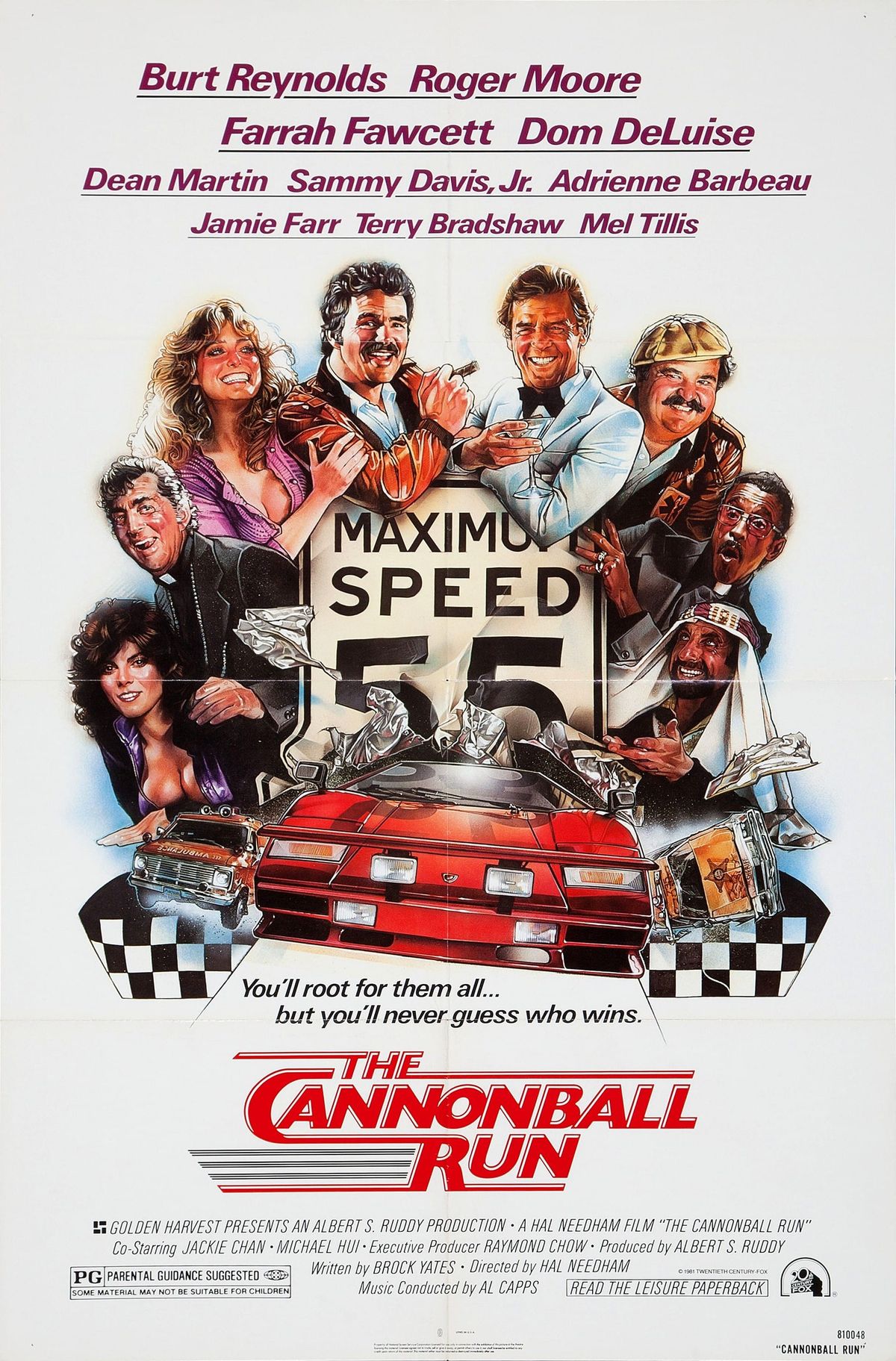
One of the things 2026 may have a hard time understanding is the appeal Burt Reynolds had in the late 70s and 80s. 1981’s Cannonball Run might be the moment Mr. Reynolds’ appeal peaked and started his downhill slide. It’s loosely based on a real illegal road race called the Cannonball Run. But, it’s like the Avengers of stars who were past their box office peak. We’re talking Dean Martin, Sammy Davis Jr., Roger Moore (yes, even though he was still James Bond), and Jamie Farr. The only person who was on the upswing was Jackie Chan, who was completely unknown in the United States, and wouldn’t actually hit stardom in America until Rumble in the Bronx in 1995. Cannonball Run was directed by stuntman-turned-director Hal Needham, who had success with Mr. Reynolds when they teamed up on Smokey and the Bandit and Hooper. Storytelling was not Mr. Needham’s strength as a director. But he loved to put some unnecessary stunt sequences into his movies. One in particular involves a plane and a voiceover by Mr. Reynolds and Dom DeLuise. It’s a scene that has nothing to do with anything in the movie, and yet, it explains so much about the film. Cannonball Run did contribute one thing to cinema history, it began the tradition of running the bloopers in the credits. Whether or not you find it funny will depend a lot upon your own sense of humor. Chances are, your grandparents thought it was a real knee-slapper. But what it does really well are the stunts and driving scenes. That alone would make it worth a movie night, just to see the craft of men and women putting their lives on the line just to get the perfect shot. 2026 would remove all that risk and just make it digital. There’s one problem, good luck finding it. Rights problems have kept it off streaming for a very long time. Sure, you can still find the DVD if you get lucky. But streaming is not really an option. It’s a bit ironic, since the sequel, Cannonball Run II, is practically streaming everywhere. If you happen across it, give it a test drive, if just to understand what 1981 audiences were really racing to see.